

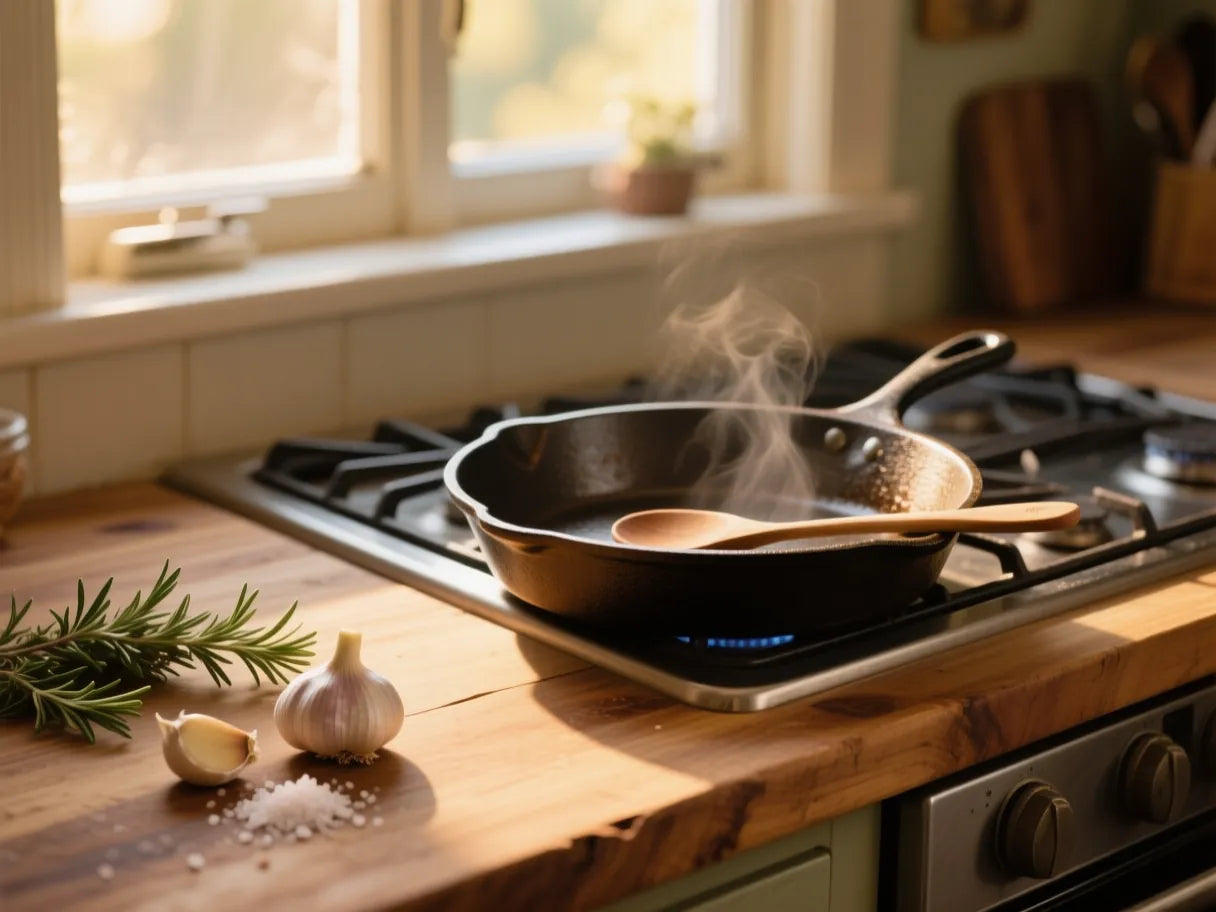
We think cooking should feel good.
Not stressful. Not confusing. Not "I hope this doesn't ruin dinner." Just you, your pan, and the quiet confidence of knowing exactly what's happening on that sizzling surface.
We're a small team of engineers, designers, and people who genuinely love food. We met through a shared frustration: every one of us had ruined a beautiful piece of meat by guessing wrong about the heat. A probe told us one spot was 135°F. Half an inch away, the pan was 80 degrees colder. We didn't know. The steak didn't care.
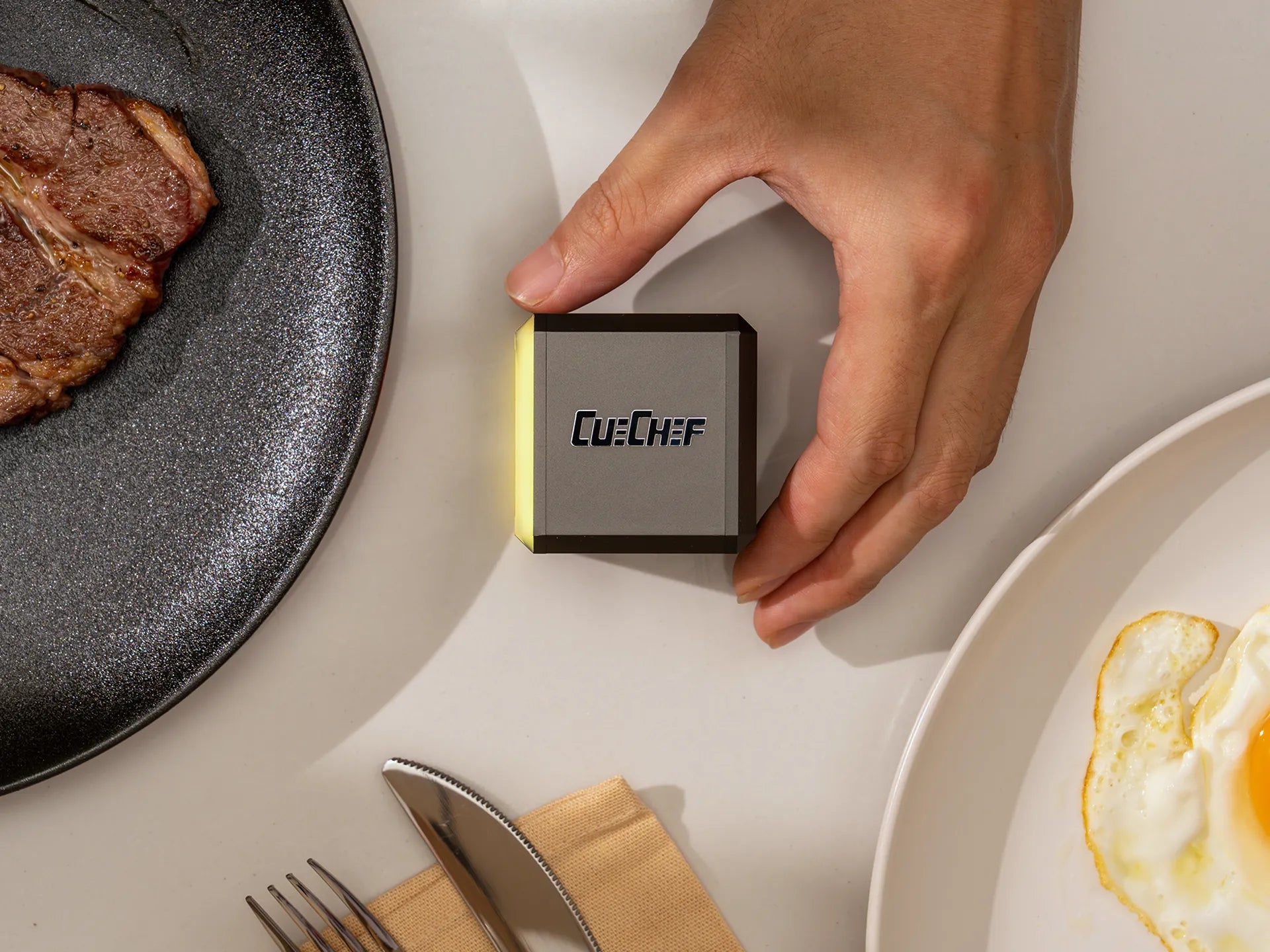
So we built something that sees what you can't. Cube O1 is the tool we wanted in our own kitchens — and we think you'll want it in yours.
We didn't set out to build a gadget. We set out to fix a feeling.
Every cook knows it. The moment you lean over a pan, tongs in hand, staring at a piece of fish and thinking: is it ready? Should I flip it? Did I already wait too long? That's not cooking. That's gambling.
We come from different worlds — embedded systems, thermal imaging, AI, industrial design — but we all landed on the same thought: the kitchen is the last room in the house that technology forgot to actually help. When the oil is hot and the moment is now, none of the smart gadgets matter. You need something that watches the pan with you.
So we built it. A tool for the moment that matters — not the one that can wait for a cloud server to respond.
Four things we believe.
Technology should augment, not replace. Cube O1 is a partner, not a pilot. You still cook. It just watches your back.
Privacy isn't a feature. It's the default. All the AI runs on-device. Your data never leaves your cube unless you choose to share it.
Good tools make better cooks. You don't need a culinary degree. You need a tool that removes the guesswork so your intuition can grow.
Cooking is a language of love. It's how we care for people. A device that helps you do that more confidently — that's worth building.
Where every honest product starts.
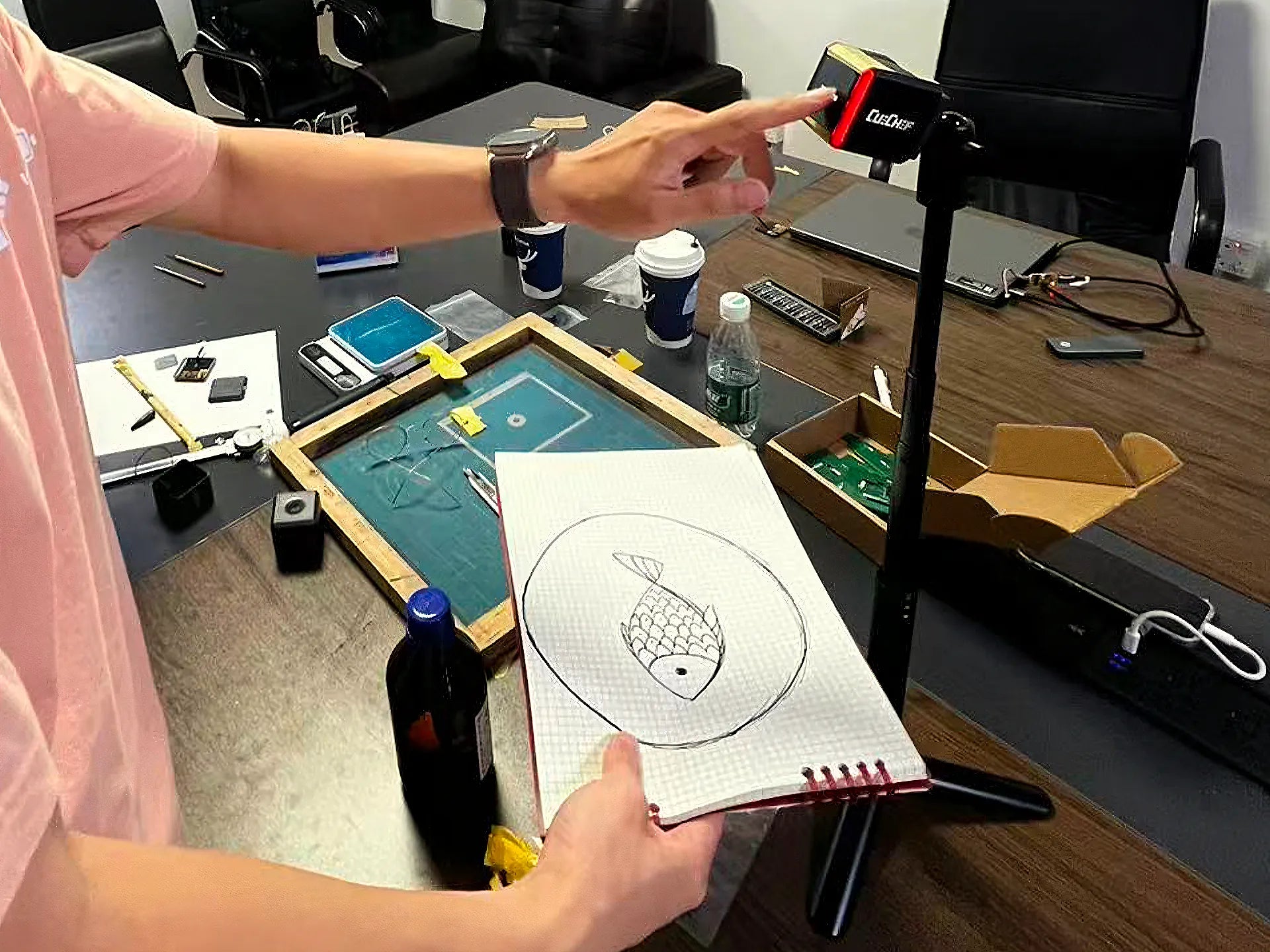
The zip-tie prototype
Cube O1 started the way most honest products do: we wanted one, and nobody was making it.
The first prototype was a mess. A thermal sensor zip-tied to a tripod, hooked up to a laptop that overheated faster than the pan we were pointing at. The AI was wrong more often than it was right. The LED was a single blinking light that meant… something. We weren't entirely sure what. But when it worked — when the green light came on at the exact moment the steak was ready, and we flipped it, and it was perfect — we knew we were onto something real.
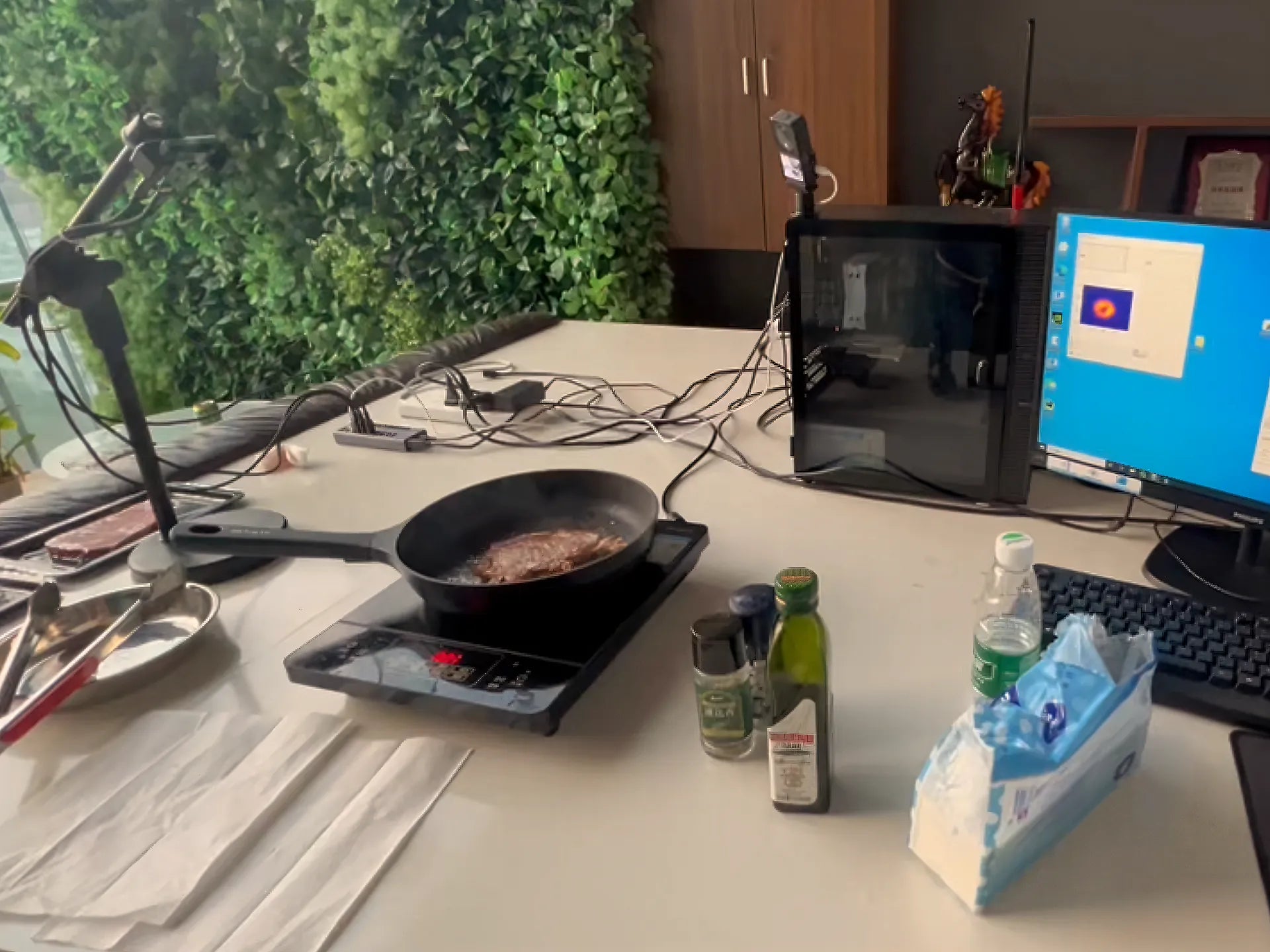
Making it work twice. Then ten times. Then every time.
Then came the hard part.
We burned through prototype after prototype — custom PCBs that shorted on contact with steam, enclosures that melted during stress tests, firmware that crashed exactly when the pan hit searing temperature. Every failure taught us something. Every fix broke something else. This is the part of product development nobody posts on social media: the months where nothing works and you start wondering if the problem is actually solvable.
It was. Slowly.
"The mount falls off." "It can't tell a pan from a pot." We fixed all of it.
We shipped beta units. The feedback was direct.
Every feature in the Cube O1 you see today came from someone who used an earlier, worse version and cared enough to tell us what sucked. We launched on Kickstarter. The campaign hit 1,029% of its goal — not because of marketing, but because enough people recognized the same problem we'd been chasing: the feeling of staring at a pan and not knowing.
We're still chasing that green light.
Now we're shipping around the world.
The team has grown. The zip-tie prototype lives in a drawer somewhere. But the question that started all of this hasn't changed: what if cooking felt as good as eating?